
Accessible Travel in Aso & Kumamoto
Wheelchair-accessible sightseeing support, accompanied by a licensed physical therapist.
Tell us where you want to go.
We'll find out if it's possible — honestly.
Aso. Kumamoto Castle. Amakusa. If you use a wheelchair or need mobility support, these places raise the same question: is it actually possible?
We're based in Kumamoto, and we go and check.
Not a tour package — a physical therapist who examines the ground before you roll over it.
The honest situation here
Tokyo and Osaka have elevators, station staff, and step-free routes. Kumamoto is different.
What brings people here — the volcano, the castle, the coastline, the countryside — are often the hardest places to reach in a wheelchair. Accessibility information for this region is limited, and English information is scarcer still.
We won't tell you everything is accessible. It isn't.
What we can tell you is what's genuinely possible, what needs assistance, and what we'd honestly suggest skipping.
Aso, Kumamoto Castle, Amakusa — and anywhere else you'd like to go
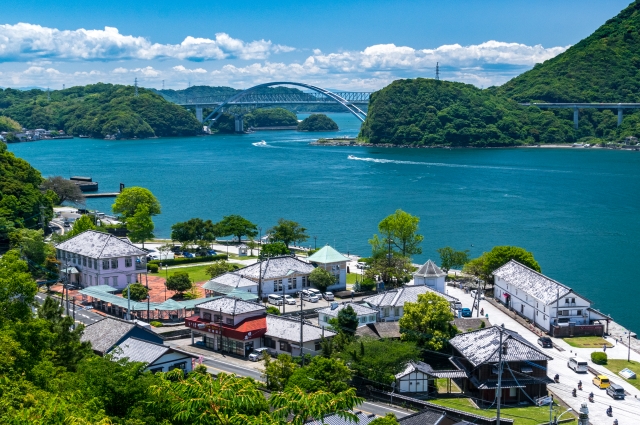
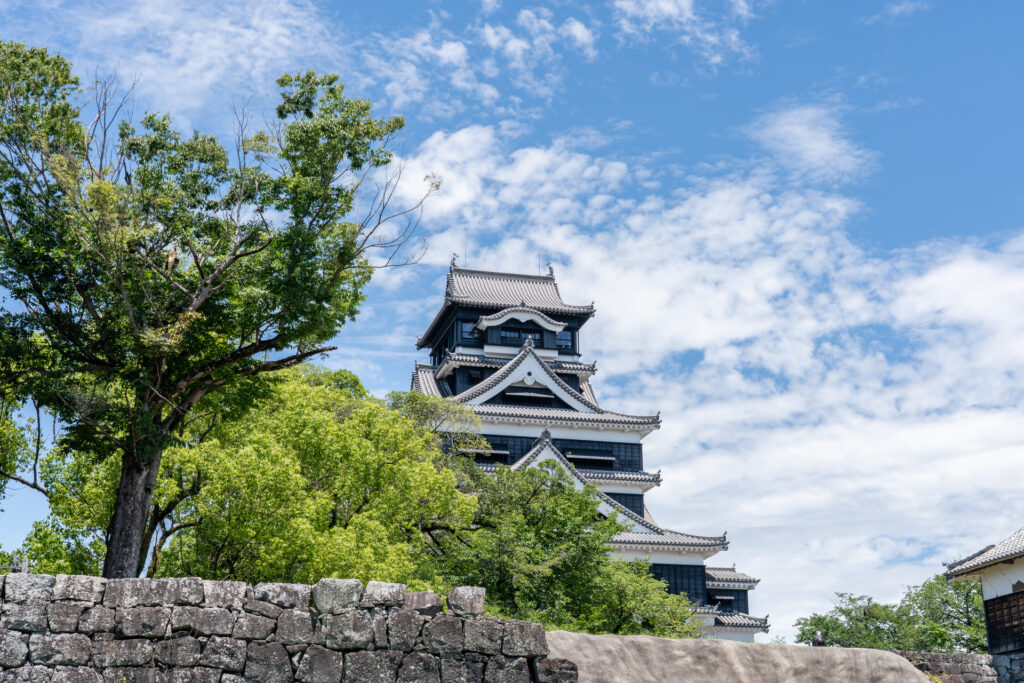
Aso is one of the world's largest volcanic calderas. Kumamoto Castle is among Japan's most significant fortresses. Amakusa is a scattering of islands and coastline.
All of them are in Kumamoto Prefecture, on the island of Kyushu — and all of them present different challenges if you use a wheelchair.
Conditions at these sites change. Volcanic activity, weather, construction, seasonal restrictions — what was accessible last year may not be today, and travel articles online go out of date quickly.
So rather than publish a list that ages badly, we do this instead:
Tell us where you'd like to go. We'll check the current conditions for those specific places, as thoroughly as we're able, and give you a straight answer before you book.
Where we can visit in advance, we do. Where we can't, we gather what current information exists and plan with margin — extra time, alternative options, and a realistic view of the risk.
Either way, you'll know what to expect. Including if we think somewhere isn't worth the difficulty.
Your companion is a physical therapist
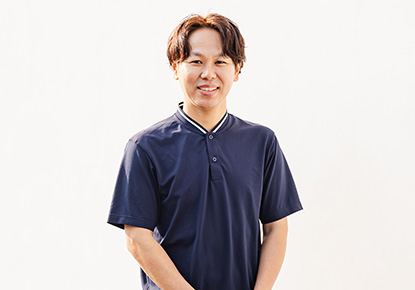
I'm Yu Katsuragi. Before starting Re-Move, I worked for 15 years as a physical therapist in Japanese hospitals.
For 15 years I watched the same thing happen. People recovered physically, went home — and then stopped going outside. Not because their bodies couldn't. Because the world outside had no plan for them.
Re-Move exists because I didn't want to keep watching that.
What a physical therapist brings to a day of travel
1. I understand how much a day of sightseeing costs a body — the transfers, the slopes, the sitting, the heat
2.I notice fatigue building before it becomes a problem, and adjust the pace accordingly
3. I know how to assist a transfer safely, and how to position someone so a long day doesn't end in pain
4. If your condition changes during the day, I know when to continue and when to stop
Licensed Physical Therapist — 15 years clinical experience
Master's degree in Health Science
Certified Respiratory Therapist (Japan, 3-Society Joint Certification)
Licensed private medical transport operator
What we actually do
Before your trip — we check what we can
For destinations within reach, we visit in advance: slopes, surfaces, restroom access, and whether that restaurant entrance has a step nobody mentioned online.
For distant locations or short-notice bookings, advance scouting isn't always possible. In those cases we say so, gather what current information exists, and plan with margin.
During your trip
I accompany you for the full day. Transfers, restrooms, meals, pacing, rest breaks — and continuous attention to how your body is actually doing.
Your family gets to be family
Not caregivers. That's much of the point.
Vehicle
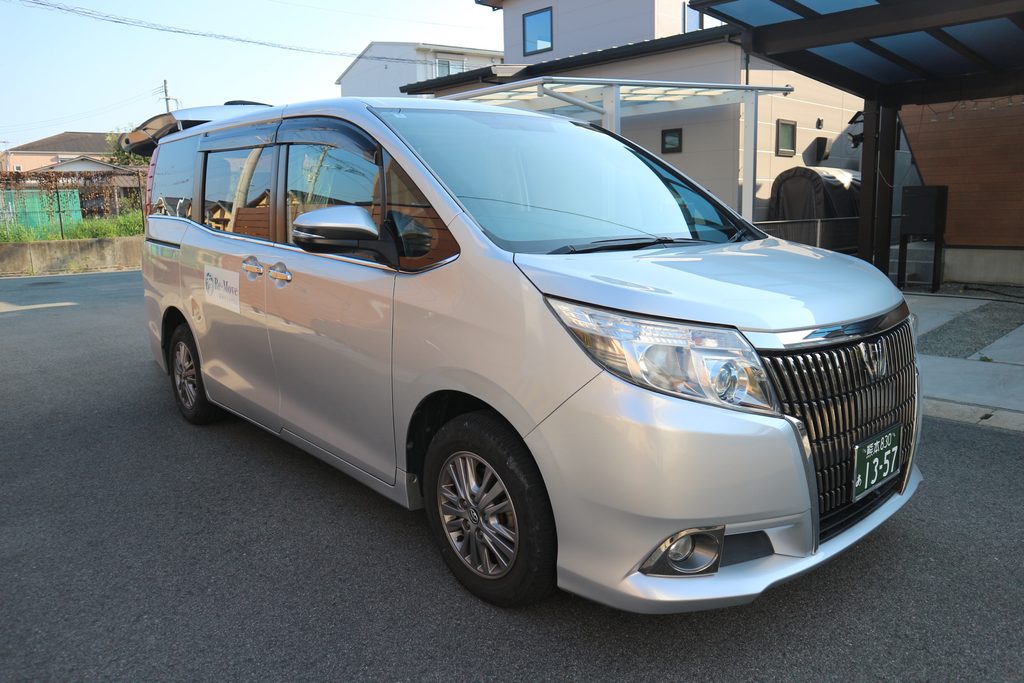
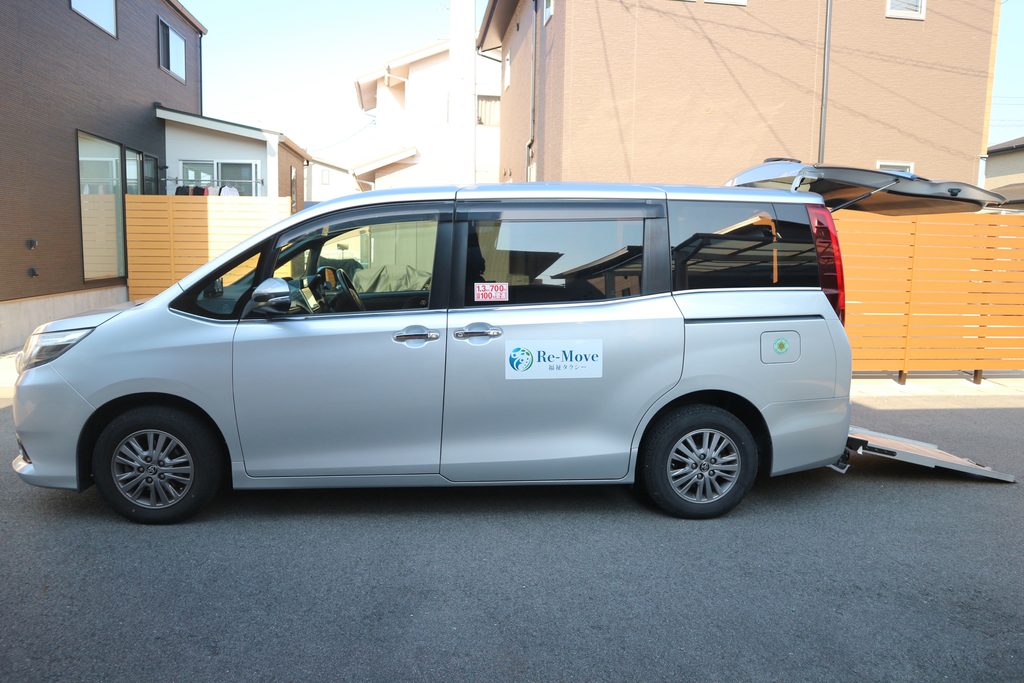
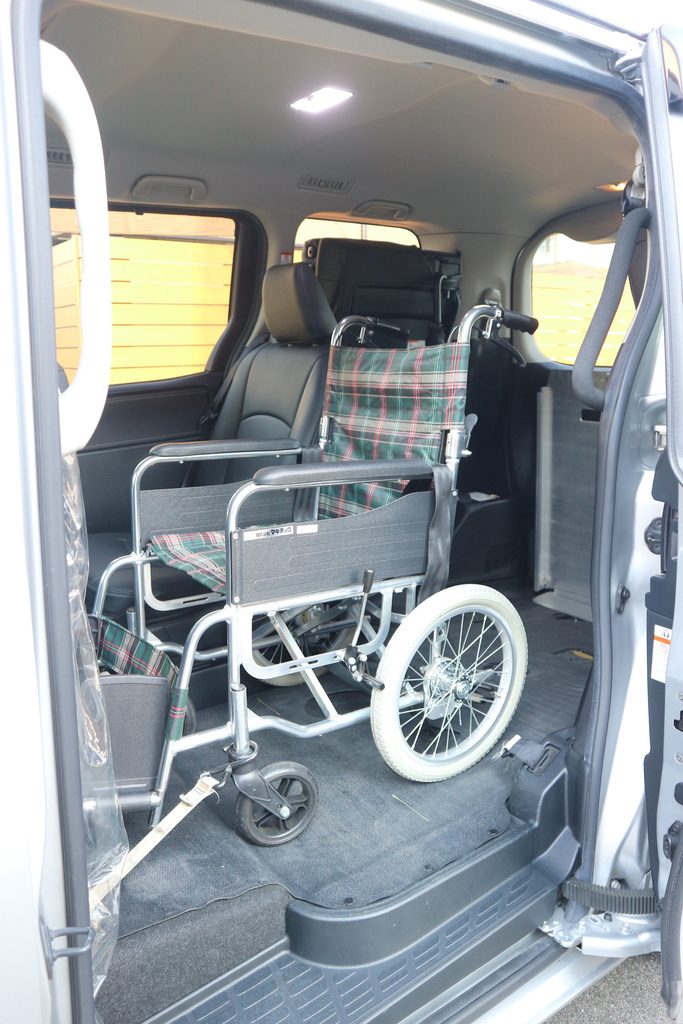
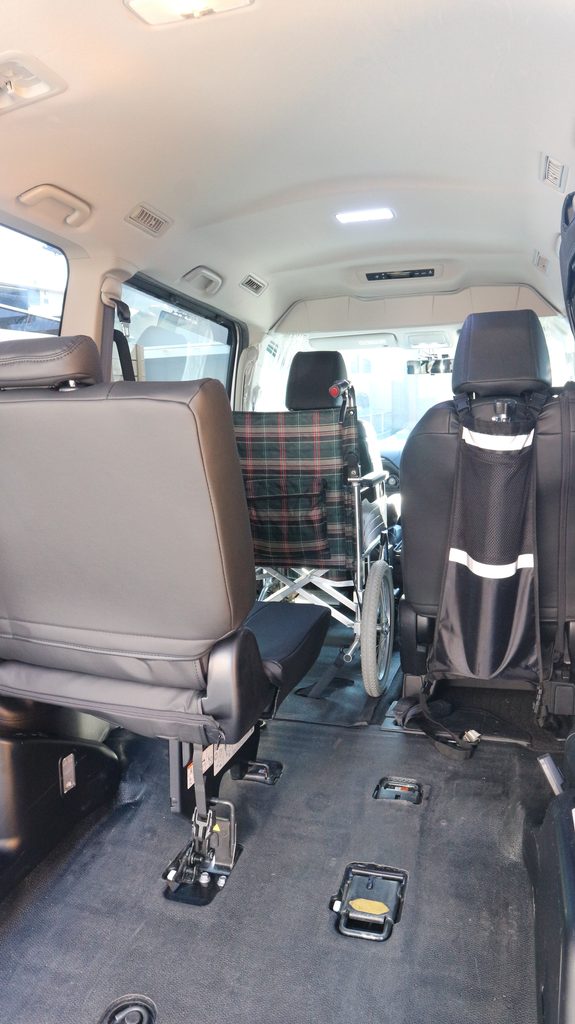
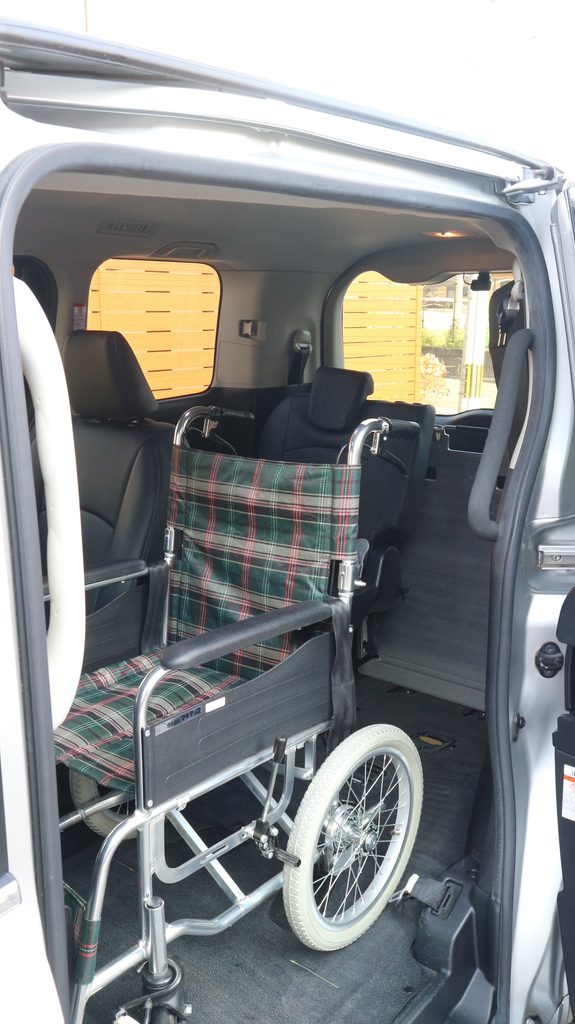
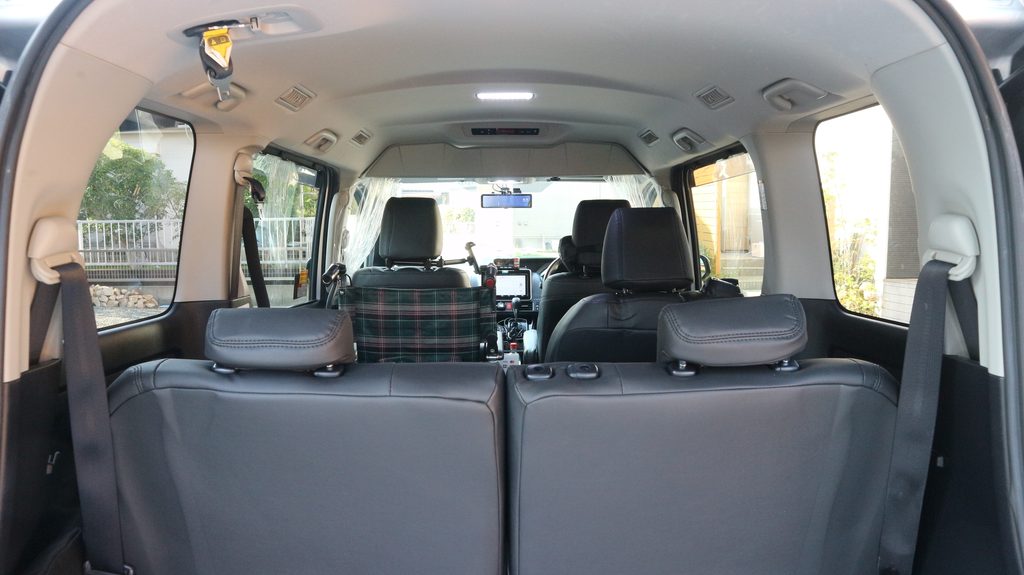
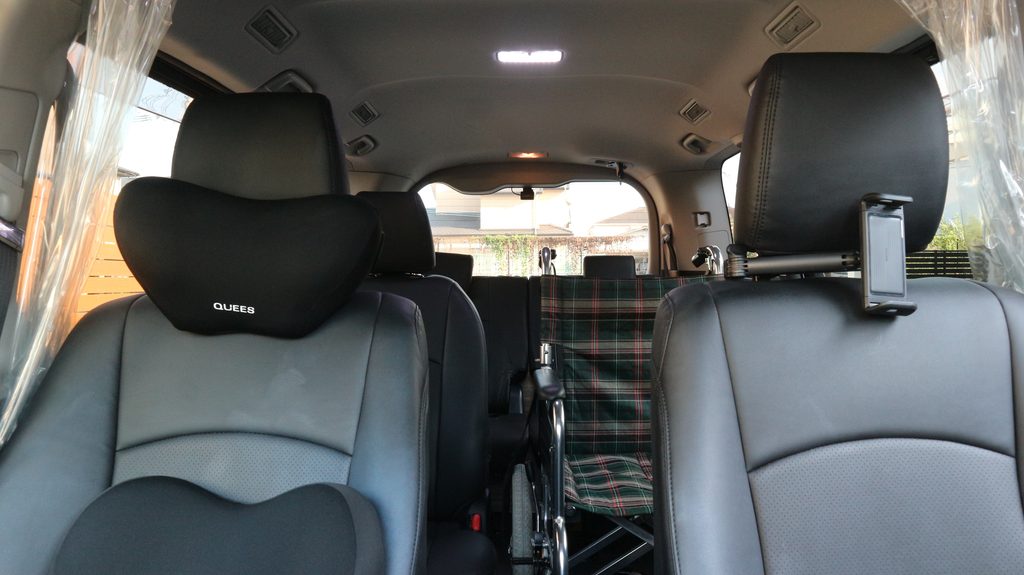
Our vehicle is a wheelchair-accessible van (Toyota Esquire).
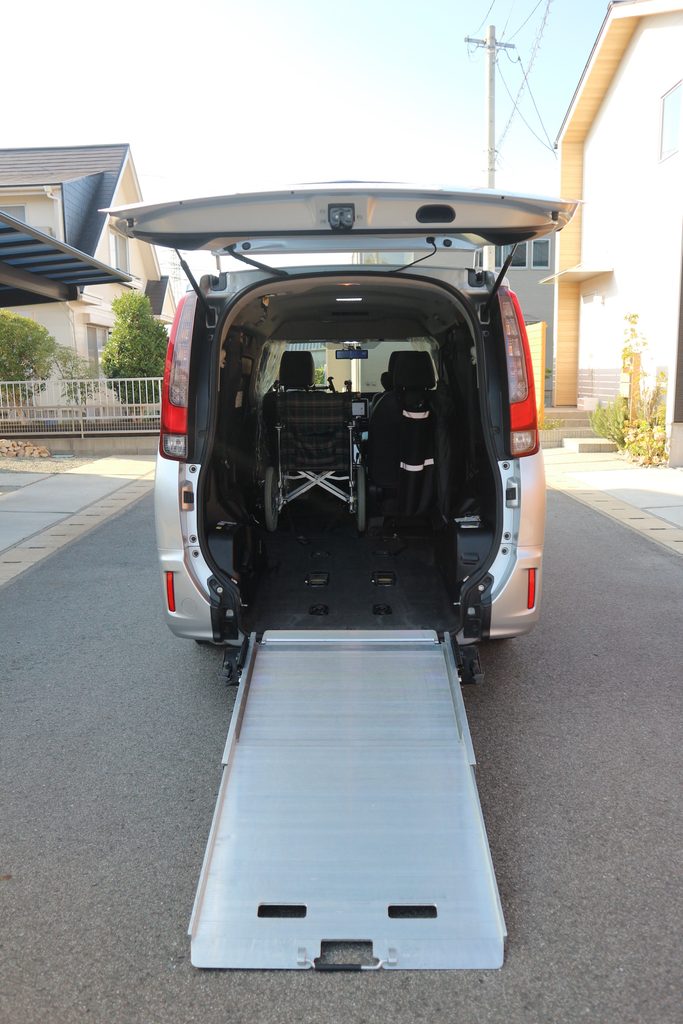
You board directly in your wheelchair via a rear ramp — the
back of the vehicle lowers as you board, so the ramp stays
gentle and the transfer is smooth and safe.
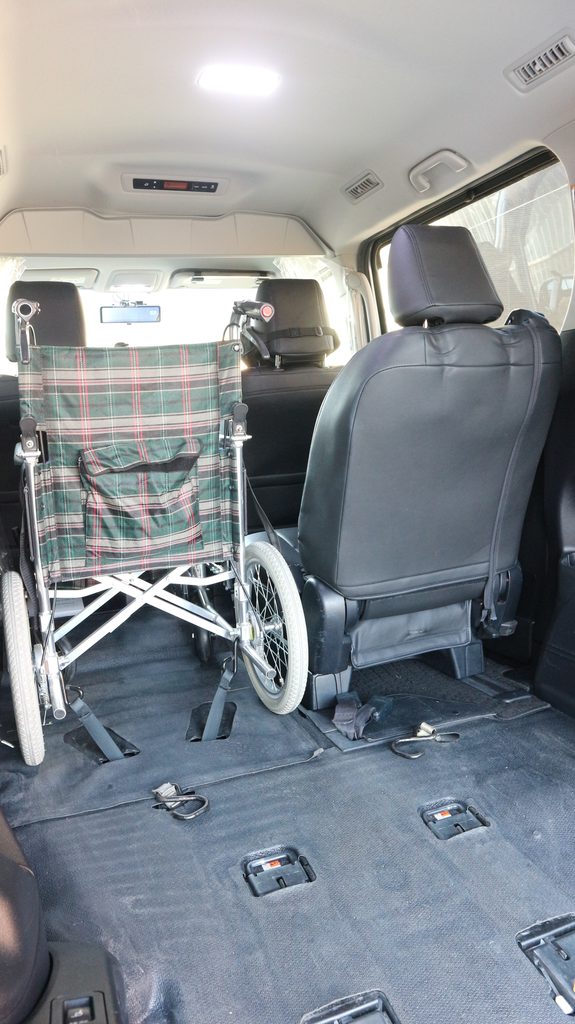
One wheelchair user and up to three accompanying passengers
can travel together (in addition to the driver). Going out
should be something the whole family shares — not a logistics
problem to solve.
Reclining and stretcher positions are also available, so you
can travel in whatever posture is most comfortable for your
body on the day.
────────────
▪ Capacity: 1 wheelchair + 3 passengers (plus driver)
▪ Ramp width: 750 mm
▪ Maximum wheelchair width: 670 mm
▪ Maximum weight (wheelchair + occupant): 200 kg
▪ Usable interior height: 1,325–1,380 mm
▪ Reclining / stretcher options available
────────────
Not sure if your wheelchair fits?
If you use an electric wheelchair, or one larger or heavier
than the figures above, please tell me its width, length,
and weight. I'll check carefully and give you a straight
answer before you book — and if a larger lift-type vehicle
is needed, I can arrange one.
Telling you honestly what's possible is part of the job.
Three formats
up to 3 hours
【Half-Day】
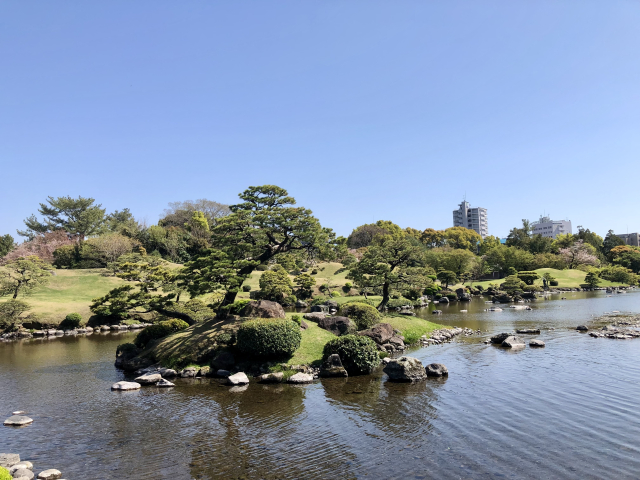
Kumamoto Castle grounds, Suizenji Garden, or a short local outing. A reasonable first step if you're unsure how much you can manage in a day.
up to 7 hours
Full-Day
Aso, Amakusa, or a custom route, with advance planning of rest points and meal stops.
overnight
Two-Day
For longer journeys, or travelers coming from outside Kumamoto.
※Overnight plans cover daytime travel and sightseeing support. For assistance during the night or early morning — bathing, toileting — we coordinate with your accommodation's services or your family. This is a safety decision, not a limit of willingness.
Pricing
Every trip differs in distance, duration, and support needs, so we quote individually after discussing what you need.
Consultation and estimates are free.
Tell us your plans. We'll give you an honest assessment of whether we can support them, and what it would cost.
We'd rather tell you the truth than sell you a trip
If a place isn't reachable, we'll say so before you book — not after you arrive.
If it is reachable, we'll be beside you.
Tell us where you'd like to go.